
Your aligners sit against your teeth for 20 to 22 hours a day, so anything on them stays in contact with your enamel and gums. Skipping cleaning lets a thin film of bacteria and plaque build up, which can cause bad breath, cloudy trays, and a higher risk of cavities and gum irritation. Clean trays are not just about looks. They protect your teeth while you straighten them.

Your Daily Aligner Cleaning Routine
A good routine is simple and worth doing every day:
- Rinse every time you take them out. Run your aligners under lukewarm water as soon as they come out of your mouth. This washes away saliva and debris before it has a chance to dry and harden.
- Brush them gently. Use a soft toothbrush and a small amount of clear, unscented soap or a mild aligner cleaner. Brush lightly all over, inside and out, then rinse well.
- Soak when they need it. Once a day, or whenever they look dull, soak your trays in an aligner cleaning solution or a denture cleaner for the time listed on the label. Rinse thoroughly before putting them back in.
- Clean your teeth first. Always brush and floss before you reinsert your aligners, so you are not sealing food and bacteria against your teeth.
What to Avoid
A few common habits do more harm than good:
- Hot water. Boiling or very hot water can warp the plastic and ruin the fit, which can set your treatment back.
- Regular toothpaste. Most toothpastes are abrasive and leave tiny scratches that trap bacteria and make trays look cloudy. Use a mild soap or a product made for aligners instead.
- Colored or scented soaps. These can tint your trays or leave a taste behind. Clear and unscented is the goal.
- Eating or drinking with them in. Take your aligners out for everything except water. Coffee, tea, wine, and colored drinks stain trays quickly, and chewing can crack them.
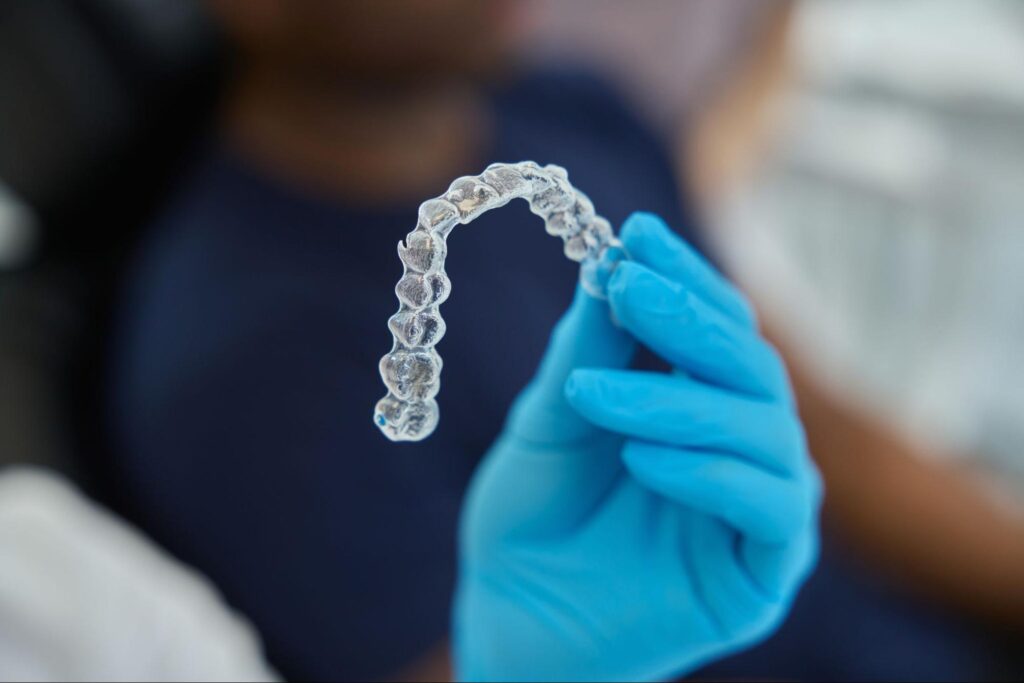
Keeping Aligners Clear and Odor-Free
If your trays start to smell or look hazy despite regular cleaning, step up the soaking and make sure you are rinsing after every meal. Store them in their case when they are not in your mouth, never wrapped in a napkin where they get tossed or exposed to heat. With a little consistency, most patients keep their aligners looking practically new for the full series. If you are still deciding between systems, our post on Invisalign versus clear aligners breaks down how the options compare.
Whether you are being treated with Invisalign in McKinney, clear aligners in Plano, Invisalign in Allen, or clear aligners in Frisco, the same simple habits keep your trays clear and your treatment on track. If a tray ever looks damaged or stops fitting right, call the office before switching to the next set, and Dr. Jensen will let you know the best next step.
Frequently Asked Questions
How do I clean my clear aligners?
Rinse them in lukewarm water whenever you take them out, brush them gently with a soft toothbrush and mild clear soap, and soak them once a day in an aligner or denture cleaner. Always brush and floss your teeth before putting the trays back in.
Can I use toothpaste on my aligners?
It is best to avoid regular toothpaste. Most kinds are abrasive and leave tiny scratches that trap bacteria and make trays look cloudy. Use a mild, clear soap or a cleaner designed for aligners instead.
How do I keep my aligners from staining?
Take your aligners out for everything except water, since coffee, tea, wine, and other colored drinks stain the plastic quickly. Rinse after meals, soak the trays daily, and store them in their case rather than leaving them exposed.
Can I clean my aligners with hot water?
No. Hot water can warp the plastic and change the fit, which can interfere with your treatment. Always use lukewarm water.